Some Assembly Required: Part II
Part II: Democracy’s User Guide
"The Declaration of Independence is our mission statement. The Constitution is our user's guide."
— Jon Meacham
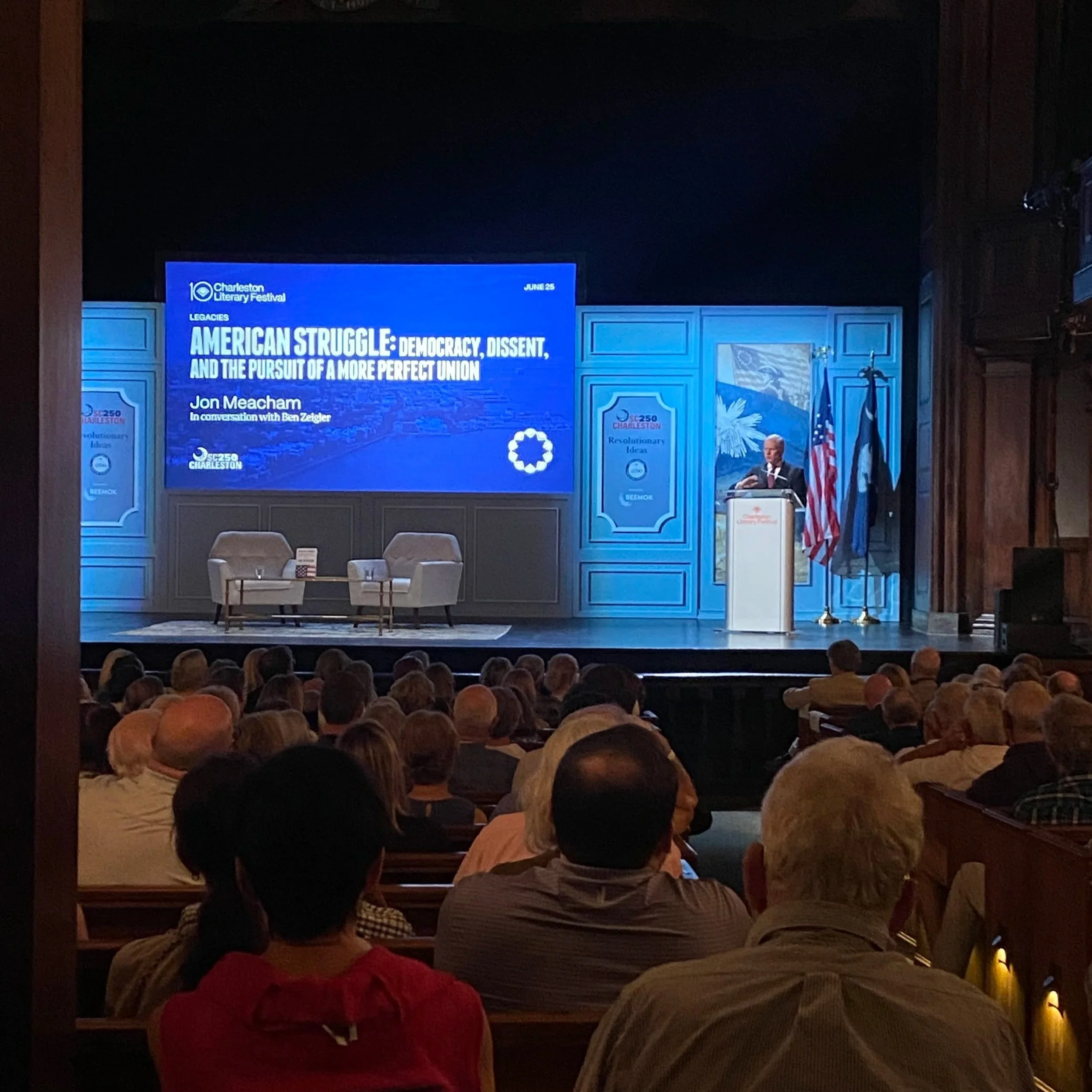
Earlier this week, I shared part one of this two-part reflection inspired by historian and Pulitzer-Prize author Jon Meacham's analogy that the Declaration of Independence is our mission statement and the Constitution is our user's guide.
👉 If you have not read part 1, check it out here
I ended that reflection with a question: How do we make the user's guide better reflect the mission statement?
I could answer that question by writing about constitutional amendments, laws, or institutional reforms. Those conversations matter, but I’m pondering something different.
What if we weren't rewriting the Constitution? Rather, what if we were rewriting the user's guide for the people actually trying to participate in our democracy today?
After all, every good user’s guide should reflect the people using it.
The founders couldn't have imagined smartphones, artificial intelligence, social media, cyberattacks, or a nation of more than 340 million people. They also couldn't have imagined many of the people reading this participating fully in our democracy (hey, we see you!)
AsI talked about in part 1, the mission hasn’t changed: liberty, equality, representation, human dignity, and government of, by, and for the people. Those ideals remain just as compelling today as they were nearly 250 years ago.
But the people have changed, challenges have changed, the ways we communicate, organize, learn, and participate have changed.
Our user's guide should reflect that. It should make participating in democracy intuitive, accessible, welcoming, and yes—even joyful—not confusing, intimidating, exhausting, or expensive.
I don't think we'd begin by asking what benefits politicians or political parties, special interests—or, I’ll be so bold as to add, billionaires. I'd hope we begin by asking: what best serves the people. You, me, our neighbors.
So, imagine opening the 2026 edition of Democracy: User’s Guide
The first page might have one sentence printed boldly: participation should be possible!
If participating in democracy requires insider knowledge, perfect timing, reliable transportation, childcare, time off work, and a graduate degree…we've written a terrible user's guide.
Good instruction manuals reduce confusion. They don't create it.
Democracy should do the same.
Turn the page.
The next chapter might simply read:
Representation should actually represent people.
Communities should choose their representatives. Representatives shouldn't choose their communities.
Every person deserves to know their voice carries meaningful weight and that the places they call home aren't simply lines on a map, but communities worthy of being heard.
A few pages later, another chapter might ask us to simplify something we've made unnecessarily complicated.
Government should be understandable.
Imagine buying a car and having no one or no resources explaining what any of the buttons on the dashboard do.
That's how many people experience democracy.
Very few of us are ever taught what county government actually does. Or why school boards matter. Or who selects judges. Or why a city council meeting can affect their daily lives even more than a presidential election.
Too often, we dismiss this as apathy. In particular, voter apathy—a phrase politicians, pundits, the media have used for decades.
Frankly, I’ve never been convinced it’s the right diagnosis.
The phrase ignores more than 200 years of barriers to participation and places the responsibility almost entirely on individuals instead of asking harder questions about the systems, structures, and processes that make civic participation difficult—or, for some, make it feel meaningless.
If millions of people struggle to participate, perhaps the problem isn't simply the participants. Perhaps it's the instructions.
I'd probably add another chapter too.
Leadership belongs to everyone.
One of the greatest misconceptions about democracy is that leadership belongs only to elected officials.
It doesn't.
Leadership belongs to the high school student who raises their hand first when no one else will, neighbors who organize a community cleanup, the auntie texting the family group chat reminding everyone to vote, the restaurant server who finishes up a shift and still shows up to a city council meeting, the teacher speaking at a school board meeting for the first time, the college student registering peers on campus, to the mom who decides they’re done waiting for someone else to fix things - and runs for office themselves. I could go on.
And I want to add a subsection here because it is something I believe fiercely and something we’re deeply committed to at Be The Ones through our Young Leaders Program.
Too often we talk about young people as "the future."
I don’t buy it. They are our now.
They're already organizing on campuses, shaping our communities, expanding access to our elections, leading movements, and reimagining what leadership looks like—right now.
The user's guide shouldn't tell them to wait. It should hand them the pen.
Better yet, it should hand them the resources, relationships, and responsibility to help write the next chapter alongside us.
Then, I'd include a section most instruction books have—but one I think conversations about our democracy are still missing.
Maintenance.
User's guides don't just tell us how to operate something. They also tell us how to care for it.
Change the oil, rotate the tires, clean the air filter. A maintenance section, if you will.
Democracy deserves one too.
Read the agenda before the meeting.
Check your voter registration at least twice a year.
Learn the names of your local officials.
Add election dates to your family calendar.
Volunteer.
Listen before assuming.
Stay curious.
Celebrate the wins.
Protect one another.
Rest when you need to.
Then come back.
And, finally I would dedicate an entire section to something I think we’ve underestimated for far too long:
Prioritize Joy.
At Be The Ones, we spend a lot of time talking about removing barriers to civic participation. It is our mission.
But if you've spent any time around us, you also know we spend a lot of time talking about joy. Not because democracy is always joyful. Anyone who has organized knows better than that.
We talk about joy because joy reminds us what we're fighting for, not just what we're fighting against. Joy is one of democracy's most important renewable resources.
We believe democracy should be wildly welcoming and fun and joyful.
Sometimes that looks like DJs registering voters on college campuses.
Sometimes it's golf carts taking people to the polls.
Sometimes it's music, art, popsicles, dance parties, or simply creating spaces where people feel like they belong.
People occasionally ask why we spend so much time talking about joy and it’s because it reminds us what we're building and our belief that joy is revolutionary.
As I've been reflecting on this user's guide, I've realized something else. Every manual has writers, editors, testers and implementors—lots of people collaborating to write it, test it, improve it, teach it, further refine it.
Democracy is no different.
So, I ask you:
Will you be the one to write new ideas?
Will you be the one to edit old ones?
Will you be the one to organize the people willing to try them?
Will you be the one to teach others how it works?
Every one of those roles matters.
At Be The Ones, our work has never been about helping people memorize the user's guide. It's been about helping people realize they have a role to play—and the power to improve it.
So maybe the question isn't whether you'll have a role in writing the next edition. You already do.
The question is what role you will choose to play.
My hope is that the generations who come after us inherit a user's guide that makes democracy easier to understand, easier to participate in, and more reflective of the mission we inherited nearly 250 years ago.
The Declaration gave us the destination.
The Constitution gave us a map.
Now it’s our turn to leave better directions.